Nominations being accepted for Bartylak and McAndrews Awards

Posted on October 23, 2014 by Chris Bonjean

The Illinois State Bar Association Standing Committee on Delivery of Legal Services is seeking nominations for the ISBA Joseph R. Bartylak Memorial Legal Services Award which honors the extraordinary commitment and dedication of a civil legal services attorney who has provided the highest caliber of compassionate legal representation and outstanding service to Illinois’ vulnerable and low-income population.

Nominations must be received by Friday, March 6, 2015. For more information on this award and how to nominate an individual, please visit the Joseph R. Bartylak homepage.

The Illinois State Bar Association’s Standing Committee on Delivery of Legal Services is also seeking nominations for the ISBA John C. McAndrews Pro Bono Service Award.

The ISBA has established the John C. McAndrews Award to honor the extraordinary commitment of individuals, bar associations, or law firm/corporate legal departments to providing free legal services to the income eligible in Illinois or expanding the availability of legal services to the income eligible in Illinois.

Best Practice: Law firm insurance defense work - opportunity or commodity?

Posted on October 22, 2014 by Chris Bonjean

Asked and Answered

By John W. Olmstead, MBA, Ph.D, CMC

Q. I am the managing partner of a 5 attorney general practice firm in Kansas City, Missouri. My book of business is down and I have been considering taking on insurance defense work. During the past year I had the opportunity of working as co-counsel on a couple of insurance defense matters and enjoyed the experience and the work. It seems to me that representing insurance companies would represent a steady flow of work. I would appreciate your thoughts.

St. Clair County Sheriff receives Law Enforcement Award from Illinois State Bar Association

Posted on October 21, 2014 by Chris Bonjean

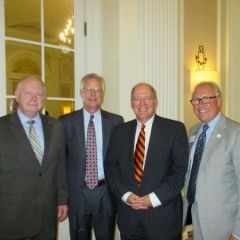
St. Clair County Sheriff Richard Watson (second from left) received a 2014 Law Enforcement Award from the Illinois State Bar Association (ISBA) during a ceremony hosted by the St. Clair County Bar Association at The Weingarten restaurant in Belleville on October 16.

On hand for the presentation were (from left) Nick Kujawa, who nominated the Sheriff for the award; Sheriff Watson, Russell Scott, a member of the ISBA Board of Governors, who presented the award; and Jon Rosenstengel, president of the St. Clair County Bar Association.

Join the fun and participate in National Celebrate Pro Bono Week events throughout Illinois!

Posted on October 20, 2014 by Chris Bonjean

By Michele Miller

Join attorneys at events all over Illinois to recognize outstanding pro bono accomplishments and educate attorneys for future pro bono work during National Celebrate Pro Bono Week 2014.

Prairie State Legal Services (PSLS) will present a live training session for the Volunteer Lawyer Courthouse Project at the Rock Island County Justice Center on Friday, October 24, 2014 from 1:30 PM to 3:30 PM. This free session, which will also be webcast, will focus on training pro bono lawyers to provide legal representation to tenants facing eviction. Attorneys will receive 2.0 hours of MCLE credit for attending and are expected to volunteer for the project at least twice. The training will include an overview of basic landlord/tenant law, focusing on tenant rights and eviction defenses, a mock trial, as well as sample documents and relevant case law.  The Volunteer Lawyer Courthouse Project provides opportunities for volunteer attorneys, while working with PSLS, to screen clients, provide legal advice and, if necessary, negotiate a settlement with the landlord or represent the tenant at trial.
 

CLE: Real Estate Law Update – 2014

Posted on October 20, 2014 by Chris Bonjean

Stay up to date on current developments and trends in the real estate law arena with this full day seminar in Lombard on October 30th! Real estate attorneys and general practitioners with intermediate practice experience who attend this program will better understand: the recent case law developments and real estate-legislation that can impact your client; the ethical issues confronting you and your practice; the real estate acquisition and development issues that can arise in a recovering market; the new Loan Disclosure form and Closing Disclosure form; and zoning considerations.

The seminar is presented by the ISBA Real Estate Law Section and qualifies for 5.50 hours MCLE credit, including 1.0 hour approved Professional Responsibility MCLE credit.

Click here for more information and to register.

Quick takes on Friday's Illinois Supreme Court opinions

Posted on October 17, 2014 by Chris Bonjean

Our panel of leading appellate attorneys review Friday's Illinois Supreme Court opinions in the civil cases Hayashi v. Illinois Department of Financial & Professional Regulation and Lake County Grading Co. v. Village of Antioch and the criminal case People v. Patterson.

CIVIL

Hayashi v. Illinois Department of Financial & Professional Regulation

By Alyssa M. Reiter, Williams, Montgomery & John Ltd.

The plaintiffs in this case were physicians whose health care licenses were permanently revoked based upon prior convictions for battery or criminal sexual abuse of their patients.  They argued that section 2105-165 of the Department of Professional Regulation Law, which was the basis for the revocation, did not apply to people whose convictions predated the Act, that the Act was impermissibly retroactive, and that the enforcement violated various state and federal constitutional provisions.

The Supreme Court found “no merit” in any of plaintiff’s claims. The Court affirmed the dismissal of plaintiffs’ complaints for declaratory and injunctive relief.

Section 2105-165 was enacted in 2011. It mandates permanent revocation, without a hearing, of the license of a health care worker who has been convicted of certain types of criminal offenses, such as “Sex Offender” offenses. Each of the plaintiffs had been convicted, before 2011, of the types of offenses included within the Act.

The Court held that the language of the Act, which provides that revocation applies when a health care worker “has been convicted,” indicated that the Act was intended to apply to convictions that predated the Act.