

In their July 2021 Illinois Bar Journal column, The Resolution, Dr. Mary L. Milano and Kenya A. Jenkins-Wright, provide an update on the ISBA’s Steering Committee on Racial Inequality, which seeks to foster diversity, equity, and inclusion based on the ISBA’s equal justice resolution and to move collaboratively toward the resolution’s goals through a variety of means. To date, Milano and Jenkins-Wright note, the committee has undertaken public education in areas such as: claim rights in our property tax system; standards of nursing homes, particularly in minority areas; lending practices; and disciplinary practices in education that impact students of color disproportionately. The committee also spearheaded continuing legal education programming on addressing areas of unequal justice and practices resulting from bias, whether conscious or unconscious. “Our education for the public subcommittee continues to educate the public on how issues of diversity, bias, and equity affect all communities in various social, economic, and ethnic ways,” the authors say. “The future is beckoning. Lawyers need to be at the forefront of its framing and its becoming. It is all worth the risk and it all demands our commitment.”
Illinois Bar Journal
-
July 6, 2021 |
Practice News
-
June 28, 2021 | Practice News
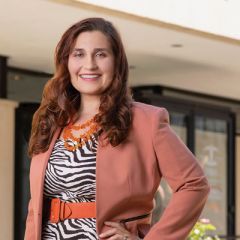
2021-2022 ISBA President Anna Krolikowska’s journey to the legal world began at age 13 when her family came to the U.S. from Poland and she enrolled in Chicago Public Schools. “We were studying for a Constitution test. I got hooked on the idea of the rule of law, and how the Constitution works in the United States,” she says. “That interest stayed with me. I didn’t have anyone in my family who was a lawyer. We didn’t know any lawyers when I was in grammar school.” But that didn’t stop Krolikowska from becoming a lawyer and going on to achieve much more. Read about her remarkable path to the ISBA presidency, and her vision for her term, in July’s Illinois Bar Journal.
-
June 21, 2021 | Practice News

Earlier this year, Terry Mueller, of the Law Office of Steven A Lihosit, represented the defense in Illinois’ first remote civil jury trial, Renata Raskin v. Alexander Mitchell in Lake County’s 19th Judicial Circuit Court. Mueller writes about the prep work, attention to detail, and lessons learned from the trial as he and the other attorneys in the case navigated new procedures created by the Illinois Supreme Court to strike a balance between the Seventh Amendment’s guaranteed right to a trial by jury and public health guidelines for preventing the spread of the contagious coronavirus in close quarters like court facilities. Mueller especially highlights the most impactful provisions of Illinois Supreme Court Rule 45 and shares how COVID-19 has changed the legal landscape of remote jury selection.
-
June 7, 2021 | Practice News

As of late April 2021, more than 50 percent of adults in the U.S. had received at least one dose of a COVID-19 vaccine. This is welcomed progress, but the pandemic is not going away yet. In fact, the vaccination campaign may get more challenging as it now has to reach people who are more hesitant to take vaccines, writes Craig Colbrook, legislative counsel for the Illinois Office of Comptroller, in his July Illinois Bar Journal article, “Finding a ‘New Normal’ With COVID-19 Vaccines.” Employers—and the attorneys who represent them—can play an important role here, Colbrook suggests. If they properly respond to the vaccines, then they can protect their employees, return to a safe and productive workplace, and help the country end the pandemic. But there are risks, too. Colbrook explores the legal exposure that employers face regarding employee vaccination and lays out three options employers can take: 1) requiring employees to take a COVID-19 vaccine; 2) incentivizing employees to be vaccinated; or 3) encouraging employees to receive a COVID-19 vaccine.
-
June 1, 2021 | Practice News

Attorneys often enter into negotiations with the other party without having formulated a careful strategy, says Marty Latz, CEO of Latz Negotiation. Latz, who will present Five Steps to Effective Online Negotiations, an ISBA CLE program, on June 18, sat down with the Illinois Bar Journal and shared his approach to negotiation strategies and tactics and how negotiating online differs from dealing face-to-face. “In the past 40 to 50 years, there’s been a lot of great research in this particular area. There is a right way and a wrong way to negotiate,” says Latz, a former White House negotiator, former adjunct professor at Arizona State University College of Law, and author of “The Real Trump Deal: An Eye-Opening Look at How He Really Negotiates.” Read the IBJ’s June cover story, “The Art of Negotiating Online,” for more of Latz’s research-based approach to striking deals remotely.
-
May 24, 2021 | Practice News

Getting to the Illinois Supreme Court is a long shot. In any given year, the Supreme Court receives more than a thousand petitions for leave to appeal under Illinois Supreme Court Rule 315, notes Charles Insler in his May 2021 Illinois Bar Journal article, “Rule 317, Appeal as a Matter of Right.” From those thousand-plus petitions, the Court will allow leave to appeal in roughly 50 or 60 cases—about half of which are criminal and the other half civil. During the past five years, the odds of making it to the Supreme Court have ranged from one in 20 to one in 25. But what about Rule 317? The first part Rule 317 is clear and provides for automatic review in the Supreme Court when an appellate court has invalidated a state or federal statute. The second part of Rule 317, however, is less clear; but it provides an intriguing source for an appeal, as of right, to the Supreme Court, Insler explains.
-
May 17, 2021 | Practice News

In his May Illinois Bar Journal Article, “FOID Where Prohibited,” Jake Crabbs addresses the intersection of two trends of 2020: 1) a tremendous jump in gun ownership; and 2) the anecdotal rise of domestic violence during shelter-in-place conditions. These two trends intersect in the provisions of the Illinois Domestic Violence Act of 1986 and the Firearm Owners Identification (FOID) Card Act. Prosecutors, criminal defense attorneys, family law practitioners, and gun owners should all be aware of the ways these statutes interrelate and the constitutional issues that may arise whenever an order of protection is entered against a FOID cardholder. These concurrent trends may eventually lead to an increase in the total number of petitions for orders of protection against respondents who have FOID cards, Crabb writes, especially when circuit courts finally return to full capacity. This is not to suggest that FOID cardholders are more likely to commit domestic violence, per se; it is simply a plausible result of the two unrelated trends. And when it comes to orders of protection against FOID cardholders, Crabb argues, there is a significant—and constitutionally infirm—gap in the governing statutes.
-
May 10, 2021 | Practice News

As Susan Bart demonstrates in her May 2021 Illinois Bar Journal article, “Who Are My Qualified Beneficiaries?,” it is essential to determine the qualified beneficiaries of an irrevocable trust under the Illinois Trust Code (ITC). Qualified beneficiaries have rights to receive notices of the existence of the trust and certain events, information about the trust, and accounts. But qualified beneficiaries may also be necessary parties to certain actions, such as a nonjudicial settlement agreement. A trustee who fails to correctly identify qualified beneficiaries, Bart notes, may breach her or his duties to provide information to qualified beneficiaries, or may provide information to beneficiaries who are not required to receive it. The Uniform Trust Code (UTC), upon which the ITC was based, uses the concept of “qualified beneficiary” to limit the class of beneficiaries to whom certain notices must be given or consents received. Bart introduces several kinds of scenarios that unpack the differences between qualified beneficiaries and remote and contingent beneficiaries under the new ITC.
-
May 3, 2021 | Practice News
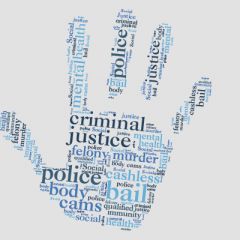
This May’s Illinois Bar Journal cover story examines the state’s sweeping criminal justice reforms signed into law earlier this year by Gov. Pritzker. The IBJ interviewed defense attorneys, prosecutors, and others who reflected on the legislation. “Some people view it as, ‘They threw every reform into this sausage maker, and this is what came out,’” Stephen Baker, a retired Cook County public defender and member of the Illinois State Bar Association’s Criminal Justice Section Council, told the IBJ. “Some people take the position that, if you wanted a massive change, the time to do it is now. People are just fed up with the conduct of the police. And the train is leaving the station; if you don’t want to get on, get out of the way.” Others spoke optimistically about the reforms: “The breadth of the bill is one of its strong points,” says Jerrod Williams, a judicial clerk and member of the ISBA Steering Committee on Racial Inequality. “Solving the problems of crime and law enforcement requires a multi-front approach. I don’t believe law enforcement alone—that is, prosecuting offenders—is in and of itself a solution to crime. It’s a piece of the solution.”
-
April 26, 2021 | Practice News

A lawyer on a Zoom videoconference with other attorneys has to take a phone call during the meeting. But he forgets to press mute as he begins to discuss details of a high-stakes negotiation with the person on the phone. Lots of arm waving from the other Zoom participants ensues, but to no avail. Also, the Zoom host had left the room, leaving no one with the power to mute the attorney. Did the loquacious lawyer breach his duties to his client? What were the duties, if any, of the innocent lawyer-bystanders who were now in possession of very significant information? What about the opposing party in the real estate transaction, were she to be presented with this information? In his April Illinois Bar Journal ethics column, “No, I Am Not a Cat,” Illinois State Bar Association General Counsel Charles Northrup examines this situation—a new twist on the old “errant fax” issue made more unique by now-widely used technology.