

Attorney Kathryn H. Mickelson provides an overview of prenuptial agreements.

Practice News
-
February 13, 2020 |
Practice News
-
February 11, 2020 | Practice News

The Illinois Supreme Court today announced a pilot program utilizing volunteer pro bono attorneys to reduce the backlog of criminal appeals that are currently pending with the Office of the State Appellate Defender (OSAD) across the state.
In this six-month pilot program, pro bono attorneys will help reduce the backlog by substituting for OSAD in certain criminal appeals. The pilot program will launch in the First and Second Districts of the Appellate Court with managerial assistance from the Administrative Office of the Illinois Courts. Upon favorable assessment of the pilot program, it would be expanded to include the Third, Fourth and Fifth District Appellate Courts.
-
February 10, 2020 | Practice News

Conflicting federal and state laws pose many interesting legal questions for Illinois and other states that have legalized recreational cannabis. In his February 2020 Illinois Bar Journal article, “Major Buzzkill,” Joe Schomberg examines one often-overlooked issue: the availability of the U.S. Bankruptcy Code to businesses engaged in, or adjacent to, the bourgeoning legalized cannabis industry. Schomberg’s article received first place in the Illinois Bar Journal’s 2020 Lincoln Award Legal Writing Contest.
-
February 10, 2020 | Practice News
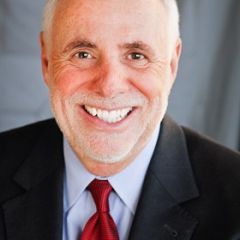
Illinois Supreme Court Justice Robert R. Thomas has announced his retirement from the Illinois Supreme Court effective Feb. 29, 2020.
Justice Thomas, 67, became the first Chief Justice from DuPage County when he was elected to that post from 2005-2008. One of the major accomplishments during Justice Thomas’ tenure as Chief was the establishment of the Supreme Court Commission on Professionalism, an outgrowth of the Special Supreme Court Committee on Civility, which was formed in 2001.
-
February 7, 2020 | Practice News
The Illinois Supreme Court has amended several Rules pertaining to bail and bond, effective March 1.
The Supreme Court on Feb. 6 announced that it has amended Rules 501, 526, and 528.
-
February 5, 2020 |
Practice News
The Illinois Attorney Registration and Disciplinary Commission (ARDC) is accepting comments for its “Intermediary Connecting Services Proposal,” which it has submitted to the Illinois Supreme Court.
The proposed Rules are available online. Comments may be emailed to information@iardc.org.
-
February 5, 2020 |
Practice News
The Illinois Attorney Registration and Disciplinary Commission (ARDC) is seeking law clerks for its Chicago and Springfield offices beginning in the summer of 2020.
Law clerks are eligible to work up to 35 hours per week during the summer months. In the Chicago office only, when school starts in the fall, the ARDC allows law clerks to work approximately 12 to 15 hours per week.
-
February 3, 2020 |
Practice News
The Illinois Office of Comptroller has named Debjani Desai as its general counsel to serve as the office’s main attorney and advise the comptroller on matters affecting the office.
Desai served as assistant general counsel in the Litigation and Eligibility group for the Illinois Department of Healthcare and Family Services, where she managed state and federal litigation and provided counsel to staff throughout Illinois.
-
February 3, 2020 | Practice News

Hanging out one’s shingle today requires leaving no stone left unturned and an open mind. Among the many important variables to consider are new billing models; how to brand, market, and develop one’s professional “voice”; and how to create a productive office space. Last December, several of the ISBA’s younger entrepreneurial members participated in a CLE event presented by the Standing Committee on Racial and Ethnic Minorities and shared what they learned as they set out on their own. The Illinois Bar Journal caught up with some of the presenters and recapped their wisdom in the IBJ’s February 2020 cover story, “Setting up Shop.”
-
January 31, 2020 | Practice News
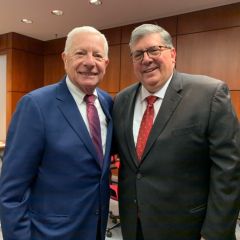
The Hon. Richard D. Felice (ISBA President 2014-2015) was formally sworn in as a circuit judge on Jan. 30 in DuPage County.
Several ISBA leaders, including ISBA President David B. Sosin, ISBA Past President Hon. James F. McCluskey, and ISBA Past President Hon. Vincent F. Cornelius, attended the ceremony.
Judge Felice was appointed circuit judge of the Eighteenth Judicial Circuit effective Nov. 4, 2019 through Dec. 7, 2020.