The Legal Assistance Foundation of Metropolitan Chicago seeks to hire up to six Public Benefits Enrollment Paralegals. Click here to learn more.

Practice News
-
November 29, 2010 |
Practice News
-
November 29, 2010 |
Practice News
The Senate and House have created two special committees to study changes in the workers' compensation laws hoping to have legislation prepared in early January before the 96th General Assembly adjourns. The committees are evenly divided between the Democrats and Republicans. The Senate committee meets today at 1 p.m. in Springfield and the House Friday in Chicago at 1:30 in the Bilandic Building.
-
November 28, 2010 |
Practice News
[caption id="attachment_16243" align="alignright" width="300" caption="ISBA President Jack Carey presented Justice Stevens with the replica Abraham Lincoln bust during the ISBA's Supreme Court visit in 2009. It showed up in Justice Stevens' office during a 60 Minutes segment Sunday night."][/caption] Retired Supreme Court Justice John Paul Stevens talked at length on a variety of topics on 60 Minutes Sunday night. The replica of the Abraham Lincoln bust the ISBA commissioned for the Lincoln bicentennial that ISBA Past President Jack Carey presented Justice Stevens in 2009 shows up prominently at the 3:45 mark during the main segment. The main segment is available here. Justice Stevens discusses the death penalty in an extra segment available here. Preview of the show by Adam Liptak in today's New York Times here.
-
November 19, 2010 |
Practice News
Chief Judge Stephen J. Culliton has announced that two finalists have been selected and certified for the vacancy created by the retirement of Associate Judge Joseph S. Bongiorno. The circuit judges will select either Brenda M. Carroll or James D. Orel by secret ballot.
-
November 19, 2010 |
Practice News
Chief Judge Stephen J. Culliton released the names of people who have applied for the Office of Associate Judge of the 18th Judicial Circuit of Illinois, DuPage County. Two vacancies were created by the election of Associate Judges Dorothy F. French and Ronald D. Sutter as Circuit Judges. As part of the review process of applicants for the Office of Associate Judge, Chief Judge Culliton invites public comment by letter. All letters must be received on or before Nov. 30, 2010. Comments should be addressed to:
- Chief Judge Stephen J. Culliton
- 18th Judicial Circuit Court
- 505 N. County Farm Road, Room 2015
- Wheaton, Illinois 60187
-
November 18, 2010 |
Practice News
Our panel of leading appellate attorneys review Thursday's Illinois Supreme Court opinions in State Building Venture v. O'Donnell, In re the commitment of Hernandez, People v. Zimmerman, People v. Amigon, People v. Alexander, People v. Jocko and People v. Carrera.
-
November 18, 2010 |
Practice News
This convenient pocket sized edition of the new Illinois Rules of Evidence is perfect for your office, for depositions, for court appearances, or anywhere you need a quick reference. The rules, which were prepared by the Special Supreme Court Committee on Illinois Evidence, take effect January 1, 2011. Published November 2010; 88 pages. Buy one now for everyone in your office! Pricing Members always receive the best pricing! Printed Book (Plus $2.75 tax and shipping) * Member Advantage: $9.99 * Non-Members: $14.99 For more information and to purchase a book, please visit www.isba.org/store/books/illinoisrulesofevidence. For questions or to purchase by phone please call Janice Ishmael at 800.252.8908 or e-mail her at jishmael@isba.org.
-
November 18, 2010 |
Practice News
Asked and Answered By John W. Olmstead, MBA, Ph.D, CMC Q. I am a law firm administrator with a 27 attorney firm in the southwest. This is my first law firm experience. I have been in my position for 8 months and am frustrated. Could you share your thoughts: A. During the past decade the roles of legal administrators have expanded dramatically. Today legal administrators can be found in firms with less than 10 attorneys. In larger firms, as well as many smaller firms, roles have shifted from day-to-day administration to firm wide leadership. A few large firm administrators are functioning as true CEOs. Large firm administrators are devoting more of their time and attention to strategic vs. administrative matters. Recent studies suggest that, in firms with more than 50 attorneys,there is an an uplifting of the role of principal administrators. Roles that have grown dramatically in recent years are strategic planning and practice management. Administrator’s roles in large law firms are no longer restricted to administrative matters.
-
November 17, 2010 |
Practice News
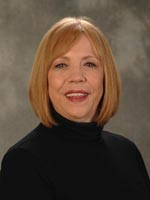
[caption id="attachment_16179" align="alignright" width="150" caption="Carolyn Smoot"][/caption] The Supreme Court of Illinois announced Wednesday that Carolyn B. Smoot, an attorney for 27 years, has been appointed a resident circuit judge in the First Judicial Circuit. Ms. Smoot was appointed to fill the Circuit Court seat which became vacant upon the November 1, 2010 retirement of Circuit Judge Ronald Eckiss. Her appointment is effective December 15, 2010 and will expire December 3, 2012, when the position will be filled by the winner of the 2012 General Election. "I am very honored and humbled by this appointment. I deeply appreciate the confidence that Justice Karmeier and the Illinois Supreme Court have placed in me. I look forward to serving the people as a circuit judge; becoming the first woman judge in Williamson County makes my appointment that much more special.”
-
November 16, 2010 |
Practice News
Maybe not, but you can hear the respirator running, write Stan Kaminski and Bill Seitz in the latest issue of ISBA's Tax Trends newsletter. "Undoubtedly, the impact of the [Illinois Supreme Court's recent] Provena decision along with the passage of Health Care Insurance Reform has put Illinois’ property tax exemption for charitable hospitals on life support. Whether the Illinois legislature can or will help cure the problem is questionable." The authors parse Provena, consider the impact of the Patient Protection and Affordable Care Act, and offer tips to help lawyers who represent nonprofit hospitals improve the odds that their clients will qualify for an exemption. Read their analysis.