

In this video by the Illinois Supreme Court Commission on Professionalism, attorneys Mark C. Palmer, Aaron W. Brooks, and Josef R. Kurlinkus—who are all members of the ISBA’s Standing Committee on Legal Technology—discuss what happens when law firms get hacked, how they should respond (including if they should pay a ransom), and what steps firms can take to protect their data.
Practice News
-
July 2, 2021 |
Practice News
-
June 30, 2021 | Practice News

The Illinois Supreme Court today issued two new orders which will resume statutory time restrictions for speedy trials on October 1 and relax social distancing requirements in courthouses. Both orders are effective immediately.
-
June 28, 2021 |
Practice News
This video explains how to listen to audio versions of ISBA CLE programs to earn MCLE credit.
-
June 28, 2021 | Practice News
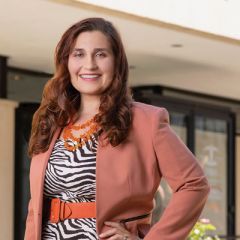
2021-2022 ISBA President Anna Krolikowska’s journey to the legal world began at age 13 when her family came to the U.S. from Poland and she enrolled in Chicago Public Schools. “We were studying for a Constitution test. I got hooked on the idea of the rule of law, and how the Constitution works in the United States,” she says. “That interest stayed with me. I didn’t have anyone in my family who was a lawyer. We didn’t know any lawyers when I was in grammar school.” But that didn’t stop Krolikowska from becoming a lawyer and going on to achieve much more. Read about her remarkable path to the ISBA presidency, and her vision for her term, in July’s Illinois Bar Journal.
-
June 23, 2021 |
Practice News
The Illinois Supreme Court Commission on Professionalism has announced that Kendra L. Abercrombie has joined the organization as Diversity, Equity, and Inclusion (DEI) Manager.
In this role, Abercrombie will lead the Commission’s educational and advocacy initiatives aimed at promoting DEI in the legal and justice systems.
-
June 21, 2021 | Practice News

Earlier this year, Terry Mueller, of the Law Office of Steven A Lihosit, represented the defense in Illinois’ first remote civil jury trial, Renata Raskin v. Alexander Mitchell in Lake County’s 19th Judicial Circuit Court. Mueller writes about the prep work, attention to detail, and lessons learned from the trial as he and the other attorneys in the case navigated new procedures created by the Illinois Supreme Court to strike a balance between the Seventh Amendment’s guaranteed right to a trial by jury and public health guidelines for preventing the spread of the contagious coronavirus in close quarters like court facilities. Mueller especially highlights the most impactful provisions of Illinois Supreme Court Rule 45 and shares how COVID-19 has changed the legal landscape of remote jury selection.
-
June 17, 2021 | Practice News
Our panel of leading appellate attorneys reviews the four Illinois Supreme Court opinions handed down Thursday, June 17. In In re Application of Tax Deed, the court analyzed case-specific facts for purposes of determining whether section 22-85 of the Property Tax Code could be applied to void a tax deed. In Municipal Trust & Savings Bank v. Moriarty, the court construed section 2-202 of the Code of Civil Procedure to determine whether a private process server may serve process on a defendant in Cook County without first being appointed by the circuit court. In Roberts v. Alexandria Transportation, Inc., the court invoked its discretion and answered a question of law certified by the United States Court of Appeals for the Seventh Circuit, which asked “whether the obligation of a settling party is uncollectable pursuant to the Illinois Joint Tortfeasor Contribution Act.” In Walker v. Chasteen, the court addressed the constitutionality of section 15-1504.1 of the Code of Civil Procedure, as well as sections 7.30 and 7.31 of the Illinois Housing Development Act.
-
June 14, 2021 | Practice News
Chief Justice Anne M. Burke and the Illinois Supreme Court announced today amendments to Rule 756 and Rule 751, which will give $10 from the attorney registration fee to the Illinois Lawyers Assistance Program (LAP) and an additional $10 allocation for the Supreme Court Commission on Access to Justice (ATJ Commission) to provide funding for Illinois Court Help.
-
June 11, 2021 | Practice News
Chief Justice Anne M. Burke and the Illinois Supreme Court announced today amendments to Rule 11 and Rule 371 which alter the manner of serving certain legal documents and how a rule on confidential records is applied.
-
June 7, 2021 | Practice News
The Illinois Supreme Court today issued an order pausing the implementation of the 2021 judicial redistricting.