

Effective Jan. 1, 2019, Illinois employers are required to reimburse employees for expenses incurred while performing their jobs. This new requirement is an amendment to the Illinois Wage Payment and Collection Act. Failure to comply with the new law can result in damages equal to the reimbursement amount, a 2-percent penalty for each month the expenses were not paid, and attorneys’ fees and costs incurred by the employee. In her article, “To Pay or Not to Pay: Should You Reimburse Your Employee’s Expenses?,” business and employment law attorney Helen Bloch provides practical takeaways and advice for ensuring you and your clients are complying with the new requirement.

ISBA members, sign up to receive The Bar News' biweekly e-newsletter by emailing emailpreferences@isba.org
-
March 4, 2019 |
Practice News
-
March 1, 2019 |
CLE
Mediation is designed to resolve differences both in and out of the courts. It requires a very different mindset than courtroom litigation. Don’t miss this Master Series program March 25-29 in Chicago that trains practitioners to resolve conflicts in a non-adversarial, non-confrontational manner, allowing peaceful resolutions between parties.
-
February 27, 2019 |
Practice News
ISBA Director of Legislative Affairs Jim Covington reviews legislation in Springfield of interest to ISBA members. This week he covers civil procedure—Section 2-619 dismissal, IMDMA and priority for grandparents, emancipation of minors, domestic violence, and jury duty. Civil procedure—Section 2-619 dismissal. House Bill 3181 (Mazzochi, R-Westmont) adds a new subsection for an involuntary dismissal if a claim is unenforceable because it was (1) filed for a purpose of forcing an individual or entity to change positions or induce or coerce behavior in a manner unrelated to the claim asserted; or (2) based on allegations made to a government entity by an anonymous complainant if: (a) the anonymous complainant is not revealed; or (b) the anonymous complainant, if revealed, made the allegations to a government entity while holding an ulterior motive toward the defendant or to retaliate against the defendant. Assigned to the House Rules Committee.1 comment (Most recent February 28, 2019)
-
February 27, 2019 |
Practice News
Asked and Answered By John W. Olmstead, MBA, Ph.D, CMC Q. Our firm is a personal injury, plaintiff's litigation firm in Denver, Colorado. I am one of three partners in the firm. We have one associate who has been with us for 12 years and three recent law grad associates with less than three years’ experience. The three partners started the practice together over 30 years ago and we are all in our early 60s. Our lease expires in three years and we need to think about the future of the firm. All three of us are not ready to retire but none of us want to sign another lease. When we do retire, we would want to retire at the same time. Do you have any suggestions?1 comment (Most recent February 28, 2019)
-
February 26, 2019 |
Practice News
The Illinois Supreme Court today announced the adoption of four new sentencing order rules that are effective March 1. New Rules 452 and 557 deal with the preparation of sentencing orders for criminal cases and traffic, conservation, or ordinance violation cases, respectively. New Rules 472 and 558 address the correction of certain sentencing errors, including the imposition of fines, fees, assessments, or costs; per diem credit against fines; the calculation of presentence custody credit; and clerical errors in the written sentencing order.
-
February 26, 2019 |
CLE
Are you new to insurance law and need an introduction to basic insurance law concepts? Are you a more experienced practitioner who wants a refresher? Then don’t miss this program on March 21 in Chicago or via live webcast that gives you the basic to intermediate introduction you need to advise your clients in all insurance areas, including: the types of policies and coverage available to policyholders; first party property insurance; general liability insurance; home and auto insurance; life and health insurance; disability and long-term care insurance; and the rights of both the policyholder and insured regarding how claims are handled.
-
February 25, 2019 | Events
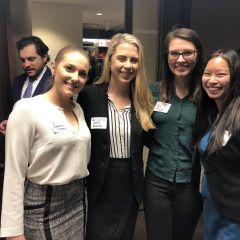 The ISBA Young Lawyers Division hosted speed networking and wine tasting events on Friday, Feb. 22, at the ISBA Mutual office in Chicago. Young lawyers, newly-admitted lawyers, and law students came together to sample and learn about wine, socialize, and network. Thank you to everyone who attended and our event sponsors!
 -
February 25, 2019 |
Practice News
No time-management system magically, and overnight, turns you into a lean, mean, efficiency machine. But becoming more productive also doesn’t require mastering every page of a two-inch-thick time-management manual. Instead, try acquiring a single new skill and developing it over time, says Affinity Consulting partner Paul Unger in the Illinois Bar Journal’s March cover story, “Manage Your Time, or It Will Manage You.” In the article, Unger, who will be the featured speaker at the ISBA Solo & Small Firm Practice Institute on March 15 in Springfield, where he will present on time management, declutters the topic and also recommends his favorite best practices and methods.
-
February 25, 2019 |
ISBA News
The 2019 Annual Meeting will be held at the Grand Geneva in Lake Geneva, Wisconsin, from June 13–15, and you can now make your hotel reservations. To make reservations at the Grand Geneva, please call 855.833.5345 and reference reservation code #76s3q8 or indicate you are attending the Illinois State Bar Association's Annual Meeting. The deadline for making reservations for lodging is on or before May 13. Reservations received after this date will be subject to availability. The deposit will be forfeited for all no-shows, early departures, and cancellations less than seven days prior to arrival.
-
February 25, 2019 |
Practice News
The Illinois Supreme Court handed down one opinion on Friday, February 22. In Edwards v. Atterberry, the court denied a petitioner’s motion for a supervisory order but allowed him leave to file a complaint for writ of prohibition. Edwards v. Atterberry By Jay Wiegman, Office of the State Appellate Defender It is not very often that a group of appellate attorneys has difficulty determining whether an Illinois Supreme Court case is criminal or civil in nature. Edwards v. Atterberry, 2019 IL 123370, however, is such a case. After a jury found Edwards guilty of violating the Timber Buyers Licensing Act, a section of the Professions, Occupations and Business Operations Act (225 ILCS 735/1, et seq. (2016)), he filed a motion for supervisory order and for leave to file a writ of prohibition seeking to prohibit Judge Atterberry from conducting a sentencing hearing or from taking any other action in the underlying criminal case. Edwards claimed that because he was charged with violating regulations rather than a statute defining a criminal offense, the circuit court lacked subject-matter jurisdiction. The supreme court denied the motion for a supervisory order but allowed Edwards leave to file a complaint for writ of prohibition.