

The United States Department of Justice, Antitrust Division, is seeking highly qualified attorneys to serve as trial attorneys in the Chicago office.
Practice News
-
October 22, 2020 |
Practice News
-
October 19, 2020 | Practice News

During the COVID-19 pandemic, some Illinois courts have been conducting hearings and small-claims trials via video conferencing. While public health concerns continue, this technological approach to court business has had its silver linings. Witnesses, for example, have been able to testify remotely, saving travel expense and time. Perhaps such remote court technology also will complement the increasing use of foundational affidavits for business records, since the other party will have ample opportunity to challenge foundational sources during discovery and trial. As Christopher DiPlacido writes in his October Illinois Bar Journal article, “For the Record,” the basic modern approach starts from the premise that all evidence is competent until the reverse is shown. Generally, DiPlacido shows, Illinois Supreme Court Rule 236 liberalizes the rules of evidence pertaining to regular business records by eliminating the need for the preparer’s testimony or proof of authorship.
-
October 16, 2020 |
Practice News
The Illinois Department of Healthcare and Family Services has an opening for two attorneys in the Springfield office.
-
October 15, 2020 |
Practice News
The Office of the General Counsel of the U.S. Department of Health and Human Services (HHS) seeks to fill one or more attorney positions in our Chicago office. Interested members of the ISBA are encouraged to apply.
The anticipated salary ranges are at Grades 11 through 14 (salary range from approximately $70,987 - $119,559 annually), depending on experience and other qualifications.
-
October 14, 2020 |
Practice News
The ISBA will be sharing videos from members of the ISBA Standing Committee on Delivery of Legal Services in honor of National Pro Bono Week.
National Pro Bono Week is recognized on October 25-31 this year.
-
October 13, 2020 | Practice News

Illinois attorneys now have a convenient online portal that simplifies and centralizes recordkeeping for continuing legal education (“CLE”) credits. Using the online system unveiled by the Illinois Supreme Court and the Court’s Minimum Continuing Legal Education (“MCLE”) Board today, attorneys can easily view their credits earned from accredited courses and qualifying bar association meetings, as well as other details about those CLE credits. The new portal is available here.
-
October 12, 2020 | Practice News

As with any new technology, the use of biometrics comes with complications. If it is suspected that the device has been used to commit a crime, law enforcement is authorized to apply for a warrant to search the device. If the device is protected by a biometric feature, the government will seek authorization to compel the owner to unlock the device. In his October Illinois Bar Journal article, “I Can’t Quite Put My Finger on It,” Thomas A. Drysdale asks whether a person can be compelled to provide a biometric feature to unlock a device and finds that, due to the constitutional protection against self-incrimination, courts have struggled to find an answer. Drysdale examines the constitutional implications of compelling biometric features, compares differing judicial opinions, and provides background information for the Illinois practitioner approaching the issue.
-
October 6, 2020 |
Practice News
The Illinois State Bar Association is inviting members to submit articles for publication in the Illinois Bar Journal (IBJ), our award-winning monthly publication that is sent to 28,000 attorneys throughout the state.
When you become an author for the IBJ, you not only establish yourself as an authoritative subject matter expert, but you can also claim CLE credit for your work.
-
October 5, 2020 | Practice News
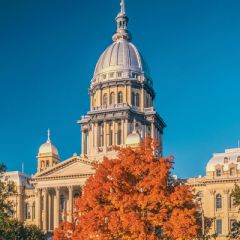
Child custody laws, driving with cannabis in one’s system, probating wills and estates—state laws addressing these and many other matters are often crafted with feedback from the ISBA, whose members have a seat at the legislative table because of their ISBA section involvement and the Association’s legislative affairs program. It is often said that the Association’s dozens of sections (and its special committees and task forces) represent its beating heart. Most of the ISBA’s networking, continuing legal education, and legislative involvement take place through these specialized groups. The October Illinois Bar Journal devotes its cover story to the tactics and strategies of the ISBA’s rigorous, hands-on legislative affairs program in which ISBA members are given an opportunity to shape the bills that often end up on the governor’s desk.
-
October 1, 2020 |
Practice News
Self-represented litigants in the Illinois Appellate Court face many unique challenges without adequate resources to help them through the appeals process. A new pro bono opportunity, Illinois Free Legal Answers for Civil Appeals, is now providing them with more legal assistance. Illinois Free Legal Answers for Civil Appeals was developed in partnership with the Administrative Office of the Illinois Courts, Illinois Supreme Court Commission on Access to Justice, the American Bar Association and the Public Interest Law Initiative (PILI).