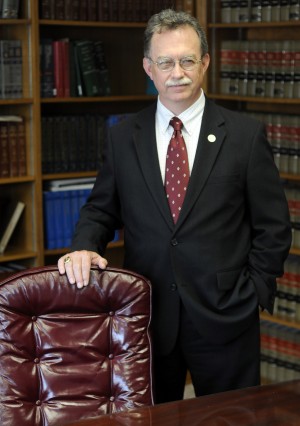
Did the Committee on Pattern Jury Instructions in Civil Cases break what wasn't broke with a 2006 IPI revision? That's what Dan Wurl asks in the latest Tort Trends.
The Illinois Pattern Instruction in question is Civil No. 105.01, “Professional Negligence—Duty.” And here's how Dan ultimately answers his own query: "The Committee went from two relatively straight-forward, seemingly non-controversial jury instructions in IPI 105.01 and 105.02 (2005) that had withstood the test of time to a 2006 version that has quickly become the source of appeals and uncertainty as to what version of IPI 105.01 accurately states Illinois law." Read his analysis.
Practice News
-
January 21, 2010 |
Practice News
-
January 20, 2010 |
Practice News
Maybe you've been thinking about going out on your own. Or maybe solo practice has been forced on you. Either way, visit ISBA's Practice Resource Center, especially the section devoted to Hanging Out a Shingle. We've collected our best solo-oriented practice guidance, ethics advice and other information -- newsletter and IBJ articles, ethics opinions, and more -- and put it in one place. You can't afford not to check it out.
-
January 20, 2010 |
Practice News
Chief Judge Stephen J. Culliton announced today that applications for the Office of Associate Judge of the 18th Judicial Circuit Court have been received from those listed below.
- Audriana T. Anderson, Wheaton
- Alan J. Brinkmeier, Elmhurst
- Brenda M. Carroll, Winfield
- Anthony V. Coco, Glen Ellyn
- Kimberly A. Davis, Winfield
- Robert E. Douglas, Carol Stream
- Scott M. Hardek, Elmhurst
- John Paul Kelly, Wheaton
- Michael R. Konewko, Winfield
- Frank J. Markov, Jr., Lombard
- Sean M. McCumber, Warrenville
- Robert S. McDonough, Wheaton
- Alex F. McGimpsey, III, Glen Ellyn
- Ronald D. Menna, Jr., Wheaton
- Brian N. Nigohosian, Darien
- Michael A. O'Brien, Wheaton
- James D. Orel, Westmont
- John J. Pcolinski, Jr., Naperville
- Charles A. Rohde, Elmhurst
- David E. Schwartz, Glen Ellyn
- Alfred A. Spitzzeri, Naperville
- Neal F. Thompson, Naperville
- Michael A. Wolfe, Warrenville
-
January 20, 2010 |
Practice News
Asked and Answered By John W. Olmstead, MBA, Ph.D, CMC Q. I am the sole owner of a 12-attorney practice. I am 55 years old and am beginning to think about retirement. The other attorneys are associates in the firm. What do I need to be thinking about in order that I can transition out of my practice and have money for retirement? While I have put some money in a 401k, I am not yet financially secure enough to retire. A. You are not alone. As the baby boom generation ages - more and more attorneys are asking this question. Unless you have an appropriate Exit Planning Strategy and put in place a sound Exit Plan, it is doubtful that you will be able to cash in on the full value of the goodwill that you have created. To exit successfully you need:
- A plan - a roadmap - that outlines the process and helps you decide on where you want to go and how you will get there.
- Timeline - a disciplined implementation timetable keyed to your Exit Plan.
- Start Early - Getting ready for exit takes time. Start early 5-8 years before you are ready to retire or exit.
- Decide - When do you want to leave the practice?
- Decide - How much cash do you need when you exit?
- Decide - To whom do you want to transfer the practice?
-
January 19, 2010 |
Practice News
The Illinois Supreme Court announced today an expansion of its judge mentoring program designed to aid judges in the performance of their judicial duties. The new Peer Judge Mentor Program is the continuation of an initiative announced 13 months ago by Illinois Supreme Court Chief Justice Thomas R. Fitzgerald and the Administrative Office of the Illinois Courts under Director Cynthia Y. Cobbs to improve public confidence in the courts and ensure judicial independence by improving the skills and performance of the Illinois judiciary. "Judicial independence is necessarily dependent upon public confidence in the operation of our courts," said Chief Justice Fitzgerald. "The Peer Mentoring Program, along with prior judicial performance initiatives announced by the Court, are prompted by a desire to produce the highest quality judiciary for the citizens of this state. They are designed to make a very good judiciary even better." The new initiative will train and assign judicial mentors to Illinois judges who seek to enhance their skills or performance. A judge's self-referral might be prompted by participation in the Court's Judicial Performance Evaluation Program, which was made mandatory for Illinois judges in the Supreme Court's 2008 initiatives. In addition to providing for self-referral, the new initiative also vests in a chief circuit court judge discretion to assign a mentor to a judge who could benefit from a confidential one-on-one relationship. Training of a corps of judicial mentors and administration of the mentoring program will be modeled after the successes of the New Judge Mentoring Program which the Court and the Administrative Office have conducted since 1998. That program was first initiated by then Chief Justice Charles E. Freeman and is considered a crucial tool in the training and development of new judges.
-
January 18, 2010 |
Practice News
When did the words "skills" and "talents" become inadequate? I keep hearing announcers and pundits in sports and politics referring to a person's "skill-sets." Is it too late to add this to Lake Superior State University's 2010 Banished Word List? Just wondering.
-
January 18, 2010 |
Practice News
I was reading Paul Krugman's column in today's New York Times in which he used the abbreviation "O.K." That got me thinking--should it be "O.K." or "OK." (We'll discuss whether I have a life later.) That led to my next question--what does Bryan think? Garner's Modern American Usage finds either okay but OK is used more in informal conversations. The Associated Press Stylebook finds OK okay as well but frowns on okay. Garner does say that the New Yorker likes O.K., so it must be a New York thing. I didn't realize until I opened Garner that OK is "the most successful Americanism ever--perhaps the best-known word on the planet." (Page 588) I'll treat OK with more respect in the future.
-
January 18, 2010 |
Practice News
Last week the Legal Writing Prof Blog recited a list of books that had been recommended for attorneys who wanted to improve their work product (writing) that had been compiled by an informal survey at the law librarian listserv. It’s a good list but didn’t include the following books that I also thought were good. I don’t think either list is exclusive of the other. Anyway, my additions to that list: Writing with Style (2nd ed. 2000), by John R. Trimble. This book was mentioned or recommended by Bryan A. Garner at one of his seminars, and I bought it on his recommendation alone. It is the best book on writing that I have ever read. I try to re-read it every year. Plain English for Lawyers (2nd ed. 2005), by Richard C. Wydick. A classic. Writing to Win (1999), by Steven D. Stark. Written by a former litigator for lawyers, it also gives specific tips on briefs, complaints, and memos. Revising Business Prose (2nd ed. 1987), by Richard A. Lanham. Provides you a template “how to” improve your writing. Writing for the Legal Audience (2003), by Wayne Schiess. Schiess is a legal-writing professor at the University of Texas. His book is excellent, and I follow his blog as well. Maybe the next list should recommend books on writing that are not directed at lawyers.
-
January 15, 2010 |
Practice News
My current issue of the Atlantic came in the mail last week. It included an article by Michael Kinsley in which he argued that newspaper articles are too long. As a consequence of their length and style, Kinsley believes that newspapers are losing readers to the Internet, which he believes get right to the point. (“Cut This Story!”) He closed by quoting the admonition he received from the chief copy editor on Kinsley’s first day at the Royal Oak Daily Tribune. “Remember, every word you cut saves the publisher money.” A good thing to remember in legal writing as well, don’t you think?
-
January 15, 2010 |
Practice News
CARPLS Legal Aid is looking for volunteer attorneys to counsel clients on Cook County's legal aid telephone hotline. You must preregister for this training via email to lwallin@carpls.org. Walk-ins will not be accepted. CARPLS is an innovative legal aid service that offers an immediate response to the every-day legal problems confronting low-income families in Cook County. CARPLS' legal aid hotline and court-based advice desks give low-income clients direct access to experienced attorneys who are trained to quickly assess and respond to a wide range of civil legal problems. CARPLS attorneys resolve over 85% of all cases in-house by providing information, advice and brief services including the preparation and review of legal documents. Clients with more complex needs are referred by CARPLS to a network of specialized legal and social service providers. CARPLS' unique "legal triage" system serves as a model for legal aid communities across the country and has increased access to justice by dramatically reducing the cost of legal aid services to the poor. Our volunteers give advice in the limited practice areas of family, consumer debt and landlord/tenant matters. Volunteers provide legal advice, draft and distribute self-help materials, and make referrals to legal service providers for representation. CARPLS volunteers, once trained, can participate in our Nightline program (evening volunteering Wednesday evenings from 6:00 - 8:00); or CARPLS Works (daytime volunteering Monday through Friday from 9:00 - 1:00 or 1:00 - 5:00). All volunteers go through a common training program and are qualified to work in any program. IF YOU ARE INTERESTED: If you would like to answer the call to help Cook County's low income residents, please send an e-mail and resume to lwallin@carpls.org, or call Leslie Wallin at (312) 421-4427.