

Join us from noon until 1 p.m. on Wednesday, October 21 for "Workers’ Compensation and COVID-19 Rebuttable Presumption." Come ready with questions as we have a lively discussion with a respondent’s and petitioner’s attorney about the new law providing a rebuttable presumption of compensability under the Illinois Workers’ Compensation Act for a COVID-19 diagnosis. The panel will debate the new law’s effectiveness and strategy for handling a COVID-19 claim. The panelists will also discuss the impact on non-COVID-19 cases and whether a different remedy exists outside of workers’ compensation.
ISBA members, sign up to receive The Bar News' biweekly e-newsletter by emailing emailpreferences@isba.org
-
October 6, 2020 | CLE

-
October 6, 2020 |
Practice News
The Illinois State Bar Association is inviting members to submit articles for publication in the Illinois Bar Journal (IBJ), our award-winning monthly publication that is sent to 28,000 attorneys throughout the state. When you become an author for the IBJ, you not only establish yourself as an authoritative subject matter expert, but you can also claim CLE credit for your work.
-
October 5, 2020 | Practice News
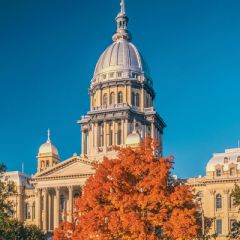 Child custody laws, driving with cannabis in one’s system, probating wills and estates—state laws addressing these and many other matters are often crafted with feedback from the ISBA, whose members have a seat at the legislative table because of their ISBA section involvement and the Association’s legislative affairs program. It is often said that the Association’s dozens of sections (and its special committees and task forces) represent its beating heart. Most of the ISBA’s networking, continuing legal education, and legislative involvement take place through these specialized groups. The October Illinois Bar Journal devotes its cover story to the tactics and strategies of the ISBA’s rigorous, hands-on legislative affairs program in which ISBA members are given an opportunity to shape the bills that often end up on the governor’s desk.
 -
October 2, 2020 | ISBA News
 Campaign season for the 2021 Illinois State Bar Association election began October 1, for open leadership seats of third vice president (outside Cook County) and one seat each for the following Board of Governors seats: Area 1 (Circuit 18), Area 6 (Circuits 7, 8, and 9), and Area 8 (Circuits 3 and 20). There is also one Board of Governors seat in Cook County. There are 26 open seats for Cook County Assembly.
 -
October 1, 2020 |
Practice News
Self-represented litigants in the Illinois Appellate Court face many unique challenges without adequate resources to help them through the appeals process. A new pro bono opportunity, Illinois Free Legal Answers for Civil Appeals, is now providing them with more legal assistance. Illinois Free Legal Answers for Civil Appeals was developed in partnership with the Administrative Office of the Illinois Courts, Illinois Supreme Court Commission on Access to Justice, the American Bar Association and the Public Interest Law Initiative (PILI).
-
September 30, 2020 | Practice News
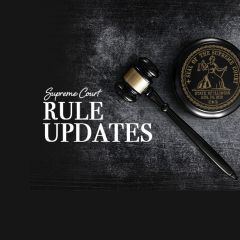 The Illinois Supreme Court today amended Rules 212, 306, 315, 316, 318, 341, 368, and 705. The changes go into effect October 1.
 -
September 30, 2020 | CLE
 Join us from 1:30 until 4:30 p.m. on Wednesday, October 7 for "Workers’ Compensation Update—Virtual Edition, Part 2." Get the information you need to protect your practice from the ethical pitfalls that can arise when representing a workers’ compensation case, the case law updates you need to effectively represent your clients, and the insight you need regarding occupational accidents in light of today’s pandemic with this information program.
 -
September 30, 2020 | ISBA News
 The ISBA honored Section Council and Committee awardees for the 2019-2020 year. Although there was no in-person ceremony this year due to the COVID-19 pandemic, several recipients were presented their awards from ISBA President Dennis Orsey and ISBA Past President David Sosin at various locations throughout the state.
 -
September 28, 2020 | Events | ISBA News
 The inaugural class of the ISBA Leadership Academy graduated on September 24 during a virtual ceremony. This landmark program is designed to train the next generation of professionals to become effective leaders in the Illinois legal community. Congratulations to the graduates!
 -
September 28, 2020 | Practice News
 In “Public Records Shortcuts,” the title of Jesse Bowman’s Finding Illinois Law column in the September issue of the Illinois Bar Journal, Bowman, associate law librarian for technology initiatives and instruction at Northwestern Pritzker School of Law’s Pritzker Legal Research Center, summarizes two free internet tools that can be used to search more than 70,000 public databases on the internet. Bowman compares these two services (Search Systems and BRB Publications), demonstrates how they work, and lists their pros and cons. Similar, more powerful search tools are available for a price, Bowman notes. But why not take these free services for a test run and see what they can do?