

The Illinois Bar Journal’s April cover story looks at the Land of Lincoln Legal Aids new Mobile Justice Clinic. With its five regional and four satellite offices, and a legal advice and referral hotline, Land of Lincoln Legal Aid serves residents in the 65 counties of central and southern Illinois. A pair of mobile justice vans—new as of late February—will extend Land of Lincoln’s ability to provide access to justice in the farthest reaches of the state’s rural areas.
Illinois Bar Journal
-
April 6, 2026 | Practice News

-
March 30, 2026 | Practice News

Verbosity, prolixity, circumlocution … impressive words that are also the weaknesses of many a lawyer. In his March Illinois Bar Journal Feedback Loops column, “Half-Life Your Message,” Patrick Barry walks through an exercise developed by University of Michigan researchers designed to help you discover and prioritize the core message of whatever you are trying to communicate. “Most discover that they can express their main point in less time than they originally thought.
-
March 23, 2026 | Practice News

As Charles N. Insler observes in his March Illinois Bar Journal article, “Appellate Practice in Motion,” motion practice is not just for the trial courts. Persuasive motions can be filed in the Illinois Appellate Court and the U.S. Court of Appeals for the Seventh Circuit. And these are not motions for an extension of time, Insler notes. Rather, these are motions to dismiss, to strike, to supplement, or to consolidate. Such critical motions can help to frame or outright win your appeal.
-
March 16, 2026 | Practice News
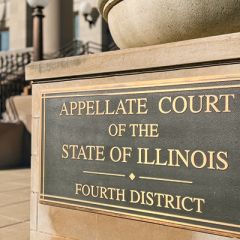
In his March Illinois Bar Journal article, “Don’t SLAPP the Messenger,” Bryan G. Lesser explores why the General Assembly amended the Illinois Citizens Participation Act to expressly cover the freedom of the press. The amendment, effective Jan. 1, 2026, aims to protect the First Amendment and deter politically-motivated lawsuits in Illinois courts, such as some strategic lawsuits against public participation (SLAPP). Lesser considers how the amendment could shape future litigation and assesses strategies for both plaintiffs and defendants in SLAPP cases.
-
March 13, 2026 | ISBA News

The 2026 first place winner of the Lincoln Award Legal Writing Contest is Caroline A. Veniero, Washington, DC, who wrote “Deposing the Top Dog: The Apex Doctrine in Illinois Federal and State Courts.” Her article appeared in the February issue of the Illinois Bar Journal.
-
March 9, 2026 | Practice News

In the March issue of the Illinois Bar Journal, Reuben A. Bernick revisits a previous IBJ article of his assessing the conflict between: a) cases holding that postdecree proceeds from the sale of retirement assets were income subject to child support and maintenance and b) other cases holding that such proceeds were not income and therefore not subject to support obligations. Reuben, in his March 2026 article, “Divorced Income,” says there continues to be no definitive resolution to this conflict in the caselaw.
-
March 2, 2026 | Practice News

Just in time for the Oscar’s, the Illinois Bar Journal’s March cover story offers a critique of not-so-great lawyers and judges from film and television. Despite their hyperbolic nature, such fictional attorneys’ dilemmas still illustrate real-life ethical issues worth examining, says Stuart Teicher, a New Jersey-based disciplinary grievance investigator, legal ethics educator and speaker, and former practicing attorney.
-
February 23, 2026 | Practice News

Molshree Sharma in her February Illinois Bar Journal article, “When Courts Create Rules of Return,” notes that courts have sometimes ordered the return of a minor child under specific conditions that the petitioning parent must comply with to balance the competing concerns of ensuring the return of minor children to their habitual residence with preventing or ideally eliminating grave harm. These conditions are typically called “ameliorative measures” or “undertakings.” In her article, Sharma assesses the split in the U.S.
-
February 17, 2026 | Practice News

In 2024, the Second District of the Illinois Appellate Court clarified the process to judicially remove liens from a decedent’s real estate in probate proceedings, explain Fredric Bryan Lesser and Jeffrey P. O’Kelley in their February 2026 Illinois Bar Journal article, “Lien Over.” That process and the decision explaining it, are not without controversy, Lesser and O’Kelly continue. In fact, in response to the Second District’s decision, the Illinois legislature is now considering amending the 138-year-old statute that empowers the probate court to remove liens.
-
February 9, 2026 | Practice News

The apex doctrine is a common-law limitation on deposing corporate executives where the executive has limited personal knowledge of the relevant issues or where the same information can be obtained from other sources, notes Caroline A. Veniero in her February Illinois Bar Journal article, “Deposing the Top Dog.” But as handy as the doctrine may be for top execs, it is far from absolute.