

The Illinois Code of Civil Procedure allows a party to submit one or more special interrogatories to the jury. A special interrogatory is a question submitted to the jury by a party seeking a determination of a specific issue or question of fact and is submitted along with the general verdict forms. The purpose of a special interrogatory is to test the general verdict by ensuring the jury understood its instructions and each element of the cause of action necessary to enter the judgment indicated. In her May Illinois Bar Journal article, “What’s So Special About Special Interrogatories,” Amy Frantz discusses the use of special interrogatories in general, provides practical tips for attorneys on their use, and highlights recent extensive changes to the special interrogatory statute.

Illinois Bar Journal
-
May 18, 2020 | Practice News

-
May 11, 2020 | Practice News

The legal profession is, out of necessity, practicality, or sometimes sheer stubbornness, notoriously backward looking. It shouldn’t come as a surprise, therefore, to realize that lawyers, judges, and the American legal system were largely unprepared for the coronavirus pandemic. We’re not unique in that, as most Americans seem taken aback by the virus. In many jurisdictions, court dockets have slowed or halted. But that hasn’t stopped the remainder of an attorney’s work from moving forward. Deadlines must be met, motions must be drafted, discovery must be served, and rulings must be issued. In his May Illinois Bar Journal article, “Law in the Time of COVID-19: Looking Backward While Moving Forward,” Brad Taylor asks how does a practitioner fulfill his or her myriad professional responsibilities while self-quarantining, practicing social distancing, and occasionally grappling with masses of frenzied, toilet-paper-obsessed shoppers? Not easily, Taylor says, and not without changing the way we perceive, at least in the short term, how legal professionals perform their roles.
-
May 4, 2020 | Practice News

A decade after limited scope representation (LSR) first became an option in Illinois, Illinois attorneys have used it sparingly. An ISBA member survey undertaken in 2018 showed that less than half (42 percent) of attorneys have engaged in intentional LSR even once, and the vast majority (85 percent) received 10 percent or less of their income from limited scope work. In May’s Illinois Bar Journal feature article, we explore the reluctance to offer LSR and talk with practitioners who are benefiting from providing LSR services to clients. They say LSR is ideal for budget-conscious clients who might otherwise have gone pro se to hold down costs, opens new income streams for attorneys, and eases the burden on court systems flooded with self-represented litigants. The article also points to two LSR webcasts the ISBA is holding: one on May 29; the other on June 10.
-
April 27, 2020 | Practice News

Attorneys and their firms operate on both sides of the online consumer and data-collecting divide. We interact with all manner of websites and services, and therefore care that private information is safely managed. We also operate websites and services where consumers and our clients expect the same. Government regulation of personal information at state, national, and supranational levels is just beginning and cannot be ignored. Since websites know no geographic boundaries, attorneys—particularly those with firms that operate in multiple states or internationally—must educate themselves about these issues. In April’s Illinois Bar Journal’s Practice HQ column, “Don’t Be a Cookie Monster,” Affinity Consulting Group’s Jeffrey Schoenberger summarizes how website cookies work and an attorney’s obligation to be aware of the internet’s data-collecting nature.
-
April 20, 2020 | Practice News
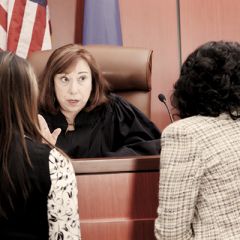
Consider the following sequence of events: The trial court enters summary judgment in favor of the defendant and strikes the affidavit of plaintiff’s expert witness. Within 30 days, the plaintiff files a motion for reconsideration of the foregoing order. The motion is stricken because the plaintiff failed to provide the judge with a courtesy copy of the motion. The plaintiff then renotices the motion (and, presumably, provides a courtesy copy this time). The motion is heard and denied on the merits six weeks later. Within 30 days of the denial, the plaintiff files notice of appeal. If, based on the foregoing, you thought the plaintiff perfected a timely appeal, think again, writes Reuben A. Bernick in his April Illinois Bar Journal article, “Perils of the Postjudgment Motion,” which offers a practical examination of postjudgment motion practice.
-
April 13, 2020 | Practice News

Restorative justice offers a method of discussing, coming to terms with, and resolving differences using a voluntary, common-sense approach. It brings people together in various ways depending on the nature of the problem, the needs of the participants, and how or where the process takes place. In their April Illinois Bar Journal article, “The Virtuous Circle,” Illinois Appellate Court Justice Michael B. Hyman and Judge Martha A. Mills (ret.), suggest that since lawyers have embraced arbitration and mediation, it’s now time for them to consider how to incorporate restorative justice into their practices.
-
April 8, 2020 | Practice News

The Illinois State Bar Association invites Young Lawyers Division (YLD) members to establish yourselves as experts in your practice area and compete for $3,500 in prize money by entering the Annual Lincoln Award Legal Writing Contest.
Submissions should be useful, practical articles on topics important to practicing lawyers. Submissions will be considered for publication in the Illinois Bar Journal.
-
April 6, 2020 |
Practice News
In times of crisis, people come together in numerous ways. One is by sharing stories. The ISBA's publications team is interested in your coronavirus experience-whether funny, sad, inspiring, or eye-awakening. Submit your coronavirus story and we will select standouts to run in ISBA publications, including the Illinois Bar Journal's May 2020 issue. A story can pertain to your personal life or your law practice, as long as the coronavirus plays a central role in the telling.
-
April 6, 2020 | Practice News

A notice of appeal is a very simple pleading and in most instances may be as short as one page. All that is required for a notice of appeal to be effective is that it be timely filed, name the party who is appealing, specify the judgment or parts of the judgment being appealed, and describe what relief the party appealing is seeking from the Illinois Appellate Court. However, as past ISBA President J. Timothy Eaton notes in his April Illinois Bar Journal article, “The Timely and Properly Filed Notice of Appeal,” its simplicity should not overshadow its importance. Many appeals have been lost before they could be heard on the merits, Eaton writes, because the appellate court lacked jurisdiction. The appellate court’s jurisdiction is dependent upon a proper notice of appeal being timely filed. Without it, only extraordinary remedies by the Illinois Supreme Court can save the appeal. Eaton, partner at Taft Stettinius & Hollister in Chicago, walks through the ins and outs of a notice of appeal properly and timely filed.
-
March 31, 2020 | Practice News

Hackers break into digital homes by exploiting weaknesses. Those knowledgeable about passwords say attorneys need to make sure their passwords are sufficiently strong, consider two-factor authentication and other additional defenses, and explore the possibility of using a password manager to create and store their digital keys. “You have to start with what your passwords are intended to provide—security,” Chad Beckett, of the Beckett Law Office in Urbana and Tuscola and chair of the ISBA Standing Committee on Legal Technology, tells the Illinois Bar Journal in its April 2020 feature article, “Getting Real About Passwords.” In the article, Beckett and other tech-savvy professionals share expert advice on creating secure passwords, how to manage them all, and why it’s essential that attorneys use strong passwords.