

For decades, Illinois has been a popular legal destination for plaintiffs’ counsel looking to litigate their respective toxic tort cases and take advantage of what they believe are plaintiff-friendly exposure laws and sympathetic juries in certain venues. Many asbestos claims are filed on behalf of plaintiffs without any connection to Illinois. Most of these plaintiffs live, work, and claim to have been exposed in Indiana, Michigan, or Wisconsin; some plaintiffs come from farther away. Despite Illinois’ forum-non-conveniens stance having been settled by the Illinois Supreme Court since 2012, plaintiff firms continue to file case after case in Illinois courts. In addition to the out-of-state plaintiff filings, plaintiff firms have also brought many out-of-state defendants into Illinois asbestos litigation—“the name first ask questions later” approach, which, argues Craig Liljestrand in his March 2020 Illinois Bar Journal article, “Can Asbestos Ever Be Mitigated From Illinois Courts?” raises more than a few eyebrows from the defense bar familiar with Illinois Supreme Court Rule 137(a).

Illinois Bar Journal
-
March 23, 2020 | Practice News

-
March 16, 2020 | Practice News

Something was amiss in the Village of Barrington Hills—or so it seemed to a recent panel of the First District Illinois Appellate Court when it decided Drury v. The Village of Barrington Hills. The facts of the case prompted the court to weigh in on the constitutionality of a repealed zoning ordinance that regulated equine activity and put a new twist on the application of the LaSalle/Sinclair factors, which have been traditionally used to evaluate legislative zoning decisions. In his March 2020 Illinois Bar Journal article, "Horsing Around," Adam Kingsley examines how the Illinois Supreme Court has rejected other standards Illinois courts have used to evaluate facial challenges to zoning ordinances and also discusses the First District Appellate Court's suggestion that when a zoning ordinance is challenged, courts may now consider the reasoning and motives that lay behind the ordinance.
-
March 9, 2020 | Practice News

In their March 2020 Illinois Bar Journal article, “Talk Shows,” Allen Wall and Caitlyn Culbertson consider the phenomenon of the deponent who has undergone careful preparations to answer deposition questions truthfully and in the most simple and direct manner possible, but then ends up providing answers that go far beyond what is necessary. In so doing, the deponent often unwittingly promotes the interests of one litigant at the expense of another. Why do deponents often provide far more information than is needed and what can attorneys do to help deponents avoid talking too much during deposition questioning? As many attorneys have never been witnesses answering questions in a deposition, Wall and Culbertson suggest that exploring a talkative deponent’s mindset will allow them to better prepare such clients and witnesses for depositions.
-
March 2, 2020 | Practice News
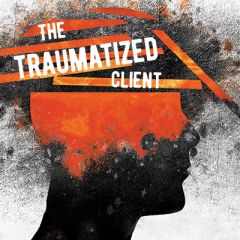
As rewarding as it sometimes is, working with traumatized clients also can be difficult: A client’s trauma can undermine the client’s own goals for representation. And sharing the burden of a client’s trauma can wear on the attorney. But by understanding the nature of trauma, how it’s expressed, and how to respond to it, lawyers can anticipate and prepare for its unpredictable effects. The Illinois Bar Journal’s March 2020 cover article, “The Traumatized Client,” examines what may be taking place in the minds of traumatized clients and introduces several strategies attorneys can use to help the client work through the trauma and focus on the case.
-
February 24, 2020 | Practice News

Defaulted defendants frequently seek relief from default orders and judgments in the form of motions to vacate brought under 735 ILCS 5/2-1301 or 2-1401. As they say, timing is everything. The availability of relief from an order or judgment to which a defaulted party may be entitled and the standard the court must apply in determining whether a party is entitled to the relief he or she seeks depend almost exclusively on the timing of the request. Moreover, because of the procedural uniqueness of the Illinois Mortgage Foreclosure Law (IMFL), found in Article XV of the Illinois Code of Civil Procedure, an understanding of the interplay between the IMFL and the Article II civil practice statutes is critical for a successful litigant. In her February 2020 Illinois Bar Journal article, “Mortgage Foreclosure Relief,” Cook County Circuit Court Judge Cecilia Horan examines possible relief from default orders and judgments available in mortgage foreclosure cases and the limitations on those remedies.
-
February 18, 2020 | Practice News

Every personal injury lawyer has handled a motor-vehicle case. When photographs exist showing damage (or the lack thereof) to the vehicles involved in a collision, the parties will invariably try to admit the photos into evidence to support their theory of the case. If the photos show substantial damage, the plaintiff will seek to admit them to argue that the impact between the vehicles was significant, and that the force of the impact caused more serious injuries. Conversely, if the photos show little or no damage, the defendant will seek to admit the photos to suggest that the impact was minimal, and that the plaintiff was therefore not likely injured to the extent claimed. But what does all this mean now, in light of Peach v. McGovern, in which the Illinois Supreme Court recently held that in personal injury cases, expert testimony is not required to admit postaccident photographs of vehicles involved in a collision? In his February 2020 Illinois Bar Journal article, “A Picture is Worth a Thousand Words,” Arlo Walsman examines this development in caselaw.
-
February 10, 2020 | Practice News

Conflicting federal and state laws pose many interesting legal questions for Illinois and other states that have legalized recreational cannabis. In his February 2020 Illinois Bar Journal article, “Major Buzzkill,” Joe Schomberg examines one often-overlooked issue: the availability of the U.S. Bankruptcy Code to businesses engaged in, or adjacent to, the bourgeoning legalized cannabis industry. Schomberg’s article received first place in the Illinois Bar Journal’s 2020 Lincoln Award Legal Writing Contest.
-
February 3, 2020 | Practice News

Hanging out one’s shingle today requires leaving no stone left unturned and an open mind. Among the many important variables to consider are new billing models; how to brand, market, and develop one’s professional “voice”; and how to create a productive office space. Last December, several of the ISBA’s younger entrepreneurial members participated in a CLE event presented by the Standing Committee on Racial and Ethnic Minorities and shared what they learned as they set out on their own. The Illinois Bar Journal caught up with some of the presenters and recapped their wisdom in the IBJ’s February 2020 cover story, “Setting up Shop.”
-
January 27, 2020 | Practice News

Although Illinois caselaw appears to suggest there is no duty to defend an insured (including an additional insured) before a suit, an insurer has a good-faith duty to its insured to respond to a demand made before suit and will often rely on two “black letter” rules to determine their responsibility. One rule is that they have no obligation to pay defense costs incurred before the insured tenders the claim to the insurer; the other rule is that the insurer owes no duties to the insured until the insured is sued. In his January 2020 Illinois Bar Journal article, “Tender-Hearted Insurers,” Scott O. Reed explains that while both rules are a rough approximation of the limits Illinois courts have placed on a liability insurer’s early-stage duties in a claim, caselaw contains exceptions and qualifications to those rules. Reed suggests that knowing the contours of these guides to an insurer’s early-stage duties will allow counsel for insureds and insurers to make informed recommendations to their respective clients about how to resolve conflicts over early-stage costs and settlements.
-
January 21, 2020 | Practice News

The question facing Illinois courts interpreting the state’s Biometric Information Privacy Act (BIPA) has been how best to interpret the meaning of “aggrieved.” Was an individual aggrieved if the defendant violated the statute or did the individual need to have sustained “some actual injury or harm, apart from the statutory violation itself, in order to sue under the Act”? Illinois appellate courts had reached conflicting decisions on this question, but on Jan. 25, 2019, the Illinois Supreme Court resolved this split and held, in Rosenbach v. Six Flags Entertainment Corp., that a person is aggrieved in the legal sense “when a legal right is invaded by the act complained of ….” In his January 2019 Illinois Bar Journal article, “Still a Wild Ride,” Charles N. Insler, a partner in the St. Louis office of HeplerBroom LLC, where he concentrates on complex commercial litigation matters, follows BIPA litigation developments after Rosenbach.