

The Illinois Supreme Court Pretrial Implementation Task Force (Task Force) posted on its website a new flowchart and considerations document on the setting of release conditions.

Practice News
-
August 8, 2022 | Practice News

-
August 8, 2022 | Practice News
The Illinois Supreme Court Rules Committee will hear comments on October 5, 2022, at a public hearing in Chicago on six proposals.
-
August 3, 2022 | Practice News | People
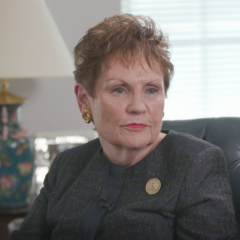
The Illinois Supreme Court Commission on Professionalism is pleased to announce the release of a Profiles in Professionalism video featuring Justice Rita B. Garman (Ret.).
The Commission’s Profiles in Professionalism series highlights distinguished members of the legal profession at the end of their careers. Previous videos include interviews with former Illinois Supreme Court Chief Justices Mary Ann McMorrow and Thomas R. Fitzgerald. The Commission interviewed Justice Garman on June 28, 2022, just days before her retirement.
-
August 1, 2022 | Practice News

The Illinois Bar Journal’s August cover story examines gender biases and stereotypes in the law and features interviews with presenters of a July 2022 ISBA CLE program titled, “Techniques to Improve Gender Communication.” Moving beyond whether gender biases exist or not, the article provides pointers and examples for checking your blind spots when working with clients, colleagues, and contexts when biases are still in play.
Read the August Illinois Bar Journal article, "The ‘Just-Right’ Conundrum."
-
July 29, 2022 |
Practice News
Chief Bankruptcy Judge Thomas L. Perkins of the United States Bankruptcy Court for the Central District of Illinois will retire on March 31, 2023. The Judicial Council of the Seventh Circuit seeks applications from all qualified applicants to succeed Judge Perkins as bankruptcy judge for the United States Bankruptcy Court for the Central District of Illinois with a duty station in Peoria, IL. Applicants must be willing to travel to other locations in the Seventh Circuit to handle cases as need arises. The term of office is 14 years, and the current salary is $205,528.00.
-
July 29, 2022 |
Practice News
The current term of office of United States Magistrate Judge Eric I. Long in Urbana, llinois expires on May 3, 2023. The United States District Court is required by law to establish a panel of citizens to consider the reappointment of the magistrate judge to a new eight-year term.
-
July 27, 2022 |
Practice News
Adult Redeploy Illinois (ARI) is a performance incentive funding program at the Illinois Criminal Justice Information Authority that empowers local jurisdictions to divert people from prison into programs that target high-risk, high-need individuals. ARI’s goal is simple: to support local stakeholders in their goal of reducing crime by using best practices.
-
July 27, 2022 | Practice News

A pro bono opportunity sponsored by the International and Immigration Law Section Council:
Many of us looked on with horror as Russia invaded Ukraine in February. As international law and immigration lawyers, we received many calls from other lawyers, friends, and family members of Ukrainians asking what could be done to help the Ukrainians driven from their homes. In April, the U.S. government announced the Uniting For Ukraine (U4U) program, which allows U.S. sponsors to submit affidavits of support for Ukrainians, who can then apply for Humanitarian Parole to enter the United States temporarily.
-
July 25, 2022 | Practice News

In May 2020, the Illinois Supreme Court endorsed videoconferencing technology in civil trials. In his July Illinois Bar Journal article, “The Wi-Fi Witness,” Michael Adler recalls how he implemented this new technology in a 2021 medical malpractice case. Adler found that it is more cost effective, makes witness scheduling and trial preparation easier, and is more effective than prerecorded evidence depositions. Whether COVID-19 is still around or long gone, Adler writes, live remote witnesses via videoconferencing is a great tool for any Illinois trial attorney.
1 comment (Most recent August 4, 2022) -
July 20, 2022 | Practice News

The Illinois State Bar Association is inviting members to submit articles for publication in the Illinois Bar Journal (IBJ), our award-winning monthly publication that is sent to 28,000 attorneys throughout the state.
When you become an author for the IBJ, you not only establish yourself as an authoritative subject matter expert, but you can also claim CLE credit for your work.