

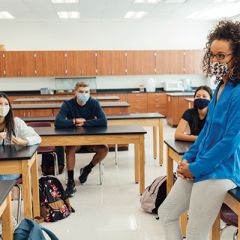
Changes to K-12 education during the COVID-19 pandemic have produced new concerns about free speech for students and teachers, notes Christine L. Self in her March Illinois Bar Journal article, “Free Speech and Public Education.” In Mahanoy Area School District v. B.L., the U.S. Supreme Court extended First Amendment protections regarding off-campus social media activity but arguably left open the door to school district regulation of student and, perhaps, teacher speech related to computer-based learning.
Practice News
-
March 14, 2022 | Practice News
-
March 7, 2022 |
Practice News
The Legal Services Corporation (LSC) announces the availability of grant funds to provide civil legal services to eligible clients during calendar year 2023. In accordance with LSC’s multiyear funding policy, grants are available for only specified service areas.
-
March 7, 2022 | Practice News
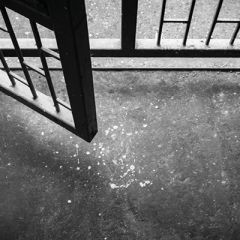
It was 1972 and Jeffrey Hicken was a newly minted lawyer who landed a state government job reviewing cases of convicted and incarcerated felons and, where possible, write up their appeals. At $150 a week, it wasn’t much money, but he was thrilled. As to his win-loss ratio? That’s easy—he almost never won. One day a hefty parcel labeled People v. J.T. Darling appeared on his desk. It contained a trial transcript, documents, and reports about the burglary conviction of Mr. Darling, or “JT”, who had just begun a six to 12-year sentence at the Menard Correctional Center. JT was from Goofy Ridge, Illinois, where the crime took place. JT’s case would lead Hicken to learn one of his most formative lessons as an attorney.
-
Sponsored ContentMarch 3, 2022 | Practice News
The Illinois Supreme Court Commission on Professionalism is pleased to announce that registration is open for The Future Is Now: Legal Services conference. The virtual conference will be held on Thursday, April 21, from 12 – 4:15 p.m. CDT.
-
March 3, 2022 | Practice News
The Illinois Courts Commission (Commission) is seeking applicants for the position of Executive Director and General Counsel. The selected candidate will serve as the head of the agency and will supervise its day-to-day operations.
The Commission is the state’s judicial disciplinary body under Article VI, Section 15 of the Illinois Constitution. Containing members drawn from the Supreme Court, the Appellate Court, and the Circuit Court, as well as public members who are not judges, the Commission decides complaints brought by the Judicial Inquiry Board against judges alleged to have committed misconduct or to be physically or mentally unable to perform their duties.
-
February 28, 2022 | Practice News

The COVID-19 pandemic has been credited—or, depending on your point of view, blamed—for accelerating adoption of technologies that the legal profession had, until the past two years, been warming up to. The March Illinois Bar Journal’s cover story, “The Magic of Online Client Intake,” explores solutions that gather client intake data; streamlines orientation and onboarding; and allows attorneys, clients, and other parties to communicate on cases and matters all within a central cloud-based hub.
-
February 22, 2022 | Practice News

The Illinois Supreme Court today removed a requirement that individuals in attendance at Illinois courts wear masks, effective February 28, 2022. Each circuit court may adopt rules requiring masks based off of local health conditions.
1 comment (Most recent February 24, 2022) -
February 22, 2022 | Practice News
by Mary F. Petruchius
Mary: Within the last couple of years, Prairie State Legal Services, Inc. has made some dramatic changes to its overall pro bono program and structure. Kim Thielbar, Prairie State’s Director of Pro Bono Services, heads up its new Pro Bono Unit. In this article, we’ll get to know Kim and what this new unit is all about, how it came into existence, and what Prairie State hopes to achieve with this innovative approach to pro bono client services.
-
February 14, 2022 | Practice News

In their February Illinois Bar Journal article, “Restorative Justice Privilege,” Hon. Stuart Katz (ret.) and Patrick Keenan-Devlin examine Public Act 102-100, which provides that any statement made during a restorative justice practice is privileged, meaning that it is inadmissible in any court or administrative proceeding. Additionally, the authors note that since restorative justice practices often involve pre- and postconference meetings, anything said in preparation for, or as a follow-up to, a practice is also privileged.
1 comment (Most recent February 18, 2022) -
February 4, 2022 | Practice News
The Illinois Supreme Court issued one opinion on Thursday, February 3.
1 comment (Most recent February 7, 2022)